
Many home chefs love the convenience of rapid countertop cooking, but it often leads to a very common question. Is It Safe to Put Glass Bowls in an Air Fryer? The simple answer is yes, but only if you use the correct type of heat-resistant dishware.
Using the wrong container can lead to a disastrous kitchen mess. Nobody wants to clean up shattered pieces from their favorite appliance. Understanding how your equipment works is crucial for safety and culinary success.
Let’s dive into everything you need to know about using transparent dishware safely. We will cover the best materials, what to strictly avoid, and how to prevent dangerous temperature reactions in your kitchen.
Table of Contents
Is It Safe to Put Glass Bowls in an Air Fryer? Quick Answer
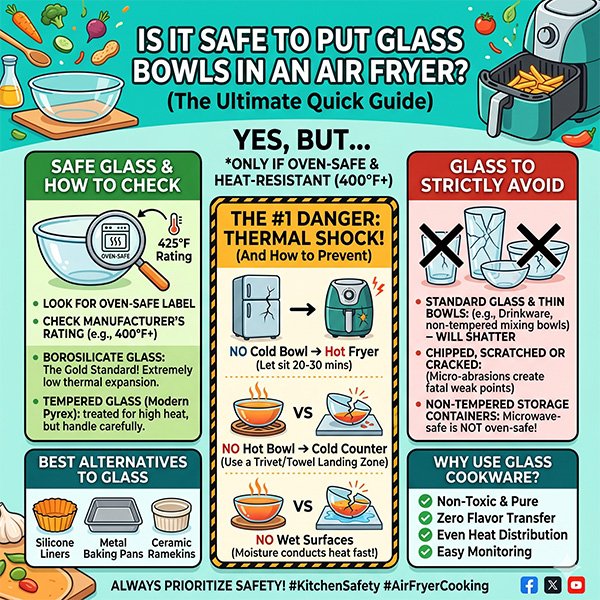
Yes, you can absolutely do this, provided the container is explicitly labeled as oven-safe. The container must be able to withstand temperatures up to at least 400°F (204°C).
However, you must exercise extreme caution to prevent thermal shock. This physical phenomenon occurs when a container experiences rapid temperature changes, causing it to crack or explode. Always prioritize safety first when cooking.
If your dish lacks an oven-safe label, do not risk it. It is always better to find suitable air fryer accessories rather than gambling with standard kitchenware that might shatter under intense pressure.
How Air Fryers Heat Your Food
To understand why dishware selection matters so much, we must look at how these appliances function. They are essentially compact, highly efficient convection ovens. They use a top-mounted heating element paired with a powerful fan. (Because this rapid air movement is the entire secret to crispy food, a sudden failure of the internal blower mechanism will completely ruin your meal). This fan circulates intensely hot air around the food at extremely high speeds.
This fan circulates intensely hot air around the food at extremely high speeds. This rapid circulation creates the crispy texture we all love. However, this intense, direct heat is very different from the gradual warming of a conventional oven.
Conventional ovens heat up slowly, allowing dishes to acclimate to the temperature change over time. Countertop fryers blast dishes with immediate, high-intensity heat. This sudden blast is exactly what causes fragile materials to fail.
Types of Glass That Are Safe for Air Fryers
Not all transparent dishware is created equal. I always flip my bowls upside down to check for specific manufacturing labels before I start cooking. Let’s break down the exact types of materials that can handle the heat safely.
Oven-Safe Glass
When a manufacturer labels a product as oven-safe glass, it means the material has been tempered or chemically treated. This heavy-duty treatment allows the dish to withstand high baking temperatures without structural failure or cracking.
Always look for the specific temperature rating on the bottom of the dish. Most treated containers can easily handle up to 425°F or 450°F. Since most countertop fryers max out at 400°F, these are generally perfectly safe to use.
Borosilicate Glass (The Gold Standard)
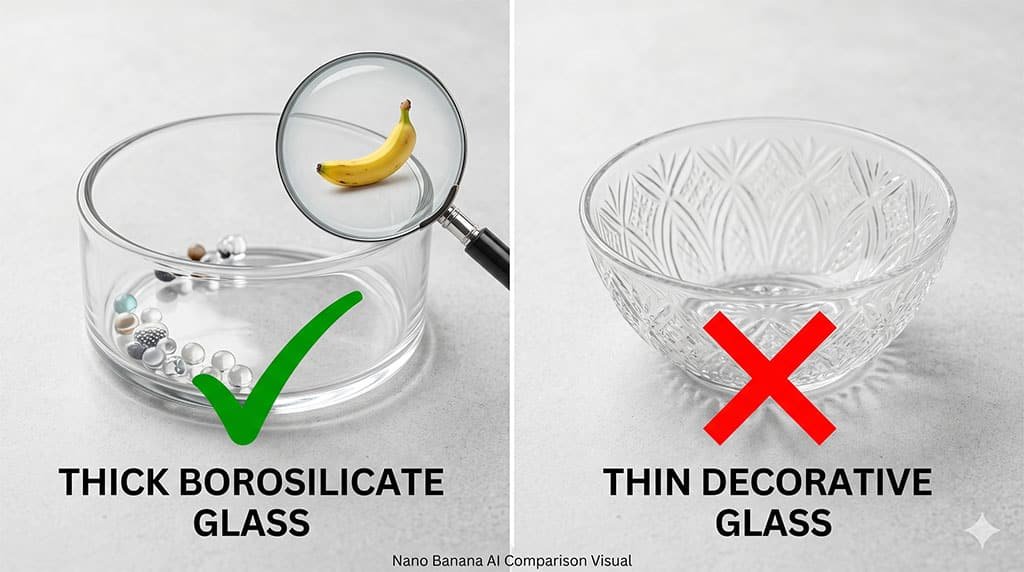
Borosilicate glass is the absolute safest option for rapid heating appliances on the market today. It is engineered with boron trioxide, which gives it a remarkably low coefficient of thermal expansion.
This simply means it does not expand or contract significantly when exposed to extreme temperature shifts. It is the exact same heavy-duty material used in laboratory beakers and high-end coffee carafes. It handles intense heat effortlessly.
Tempered Glass and Pyrex
Many people ask about using Pyrex in air fryer baskets for baking. The answer depends entirely on the age and origin of your Pyrex. Vintage Pyrex (manufactured before 1998) was made of highly durable borosilicate material.
Modern American-made Pyrex is typically made of tempered soda-lime glass. While it is treated to be much stronger than standard dishware, it is slightly more susceptible to rapid temperature shifts than the vintage stuff. It is still safe but requires careful handling.
Glass Types You Must STRICTLY Avoid
Knowing what not to use is just as important as knowing what works. Using the wrong material can completely ruin your appliance and your meal. Here are the items you must keep away from high heat.
Standard Drinkware & Thin Bowls
Never use regular drinking glasses, thin mixing bowls, or delicate decorative serving dishes in your appliance. These items are made from untreated soda-lime material. They will almost certainly shatter when blasted with 400°F circulating air.
Chipped, Scratched, or Cracked Bowls
Even a microscopic scratch compromises the structural integrity of the entire dish. When heat causes the material to expand, that tiny chip acts as a severe weak point. The pressure will concentrate there, leading to an immediate break.
Inspect your heavy-duty dishes regularly for wear and tear. If you drop a dish and it chips, relegate it to cold food storage only. Never put damaged items into a hot appliance under any circumstances.
Non-Tempered Storage Containers
Many cheap meal prep containers look sturdy but are only designed for microwave use or cold refrigerator storage. Microwaves heat the water molecules inside the food, not the container itself. Do not assume microwave-safe means oven-safe.
How to Tell if Your Glass Bowl is Air Fryer Safe
Before you place any container into your appliance basket, you need to verify its safety rating. Guessing can lead to dangerous consequences and a ruined dinner. Follow these simple verification steps to be sure.
Look for the Oven-Safe Symbol
The most reliable method is to check the bottom of the container. Manufacturers stamp or engrave safety icons directly into the material. Look closely for a tiny icon that looks like a traditional oven with wavy lines.
Sometimes, the words “Oven Safe” are written out clearly instead of an icon. If the bottom is completely blank and you do not have the original packaging, it is best to assume it is not safe for high heat.
Check the Manufacturer’s Temperature Rating
Even if a dish is explicitly rated for baking, you should verify its maximum temperature limit. You can usually find this specific information on the manufacturer’s website. Ensure the rating exceeds your appliance’s maximum temperature.
The Danger of Thermal Shock (And How to Prevent It)
Thermal shock is the absolute worst enemy of all glass cookware. It happens when one part of the material expands or contracts faster than another due to a sudden temperature change. This internal stress causes the item to violently shatter.
Never Put a Cold Bowl in a Pre-Heated Air Fryer
Taking a container full of leftovers directly from the refrigerator and placing it into a pre-heated 400°F basket is a recipe for disaster. The extreme temperature jump will almost guarantee a shattered dish and a massive mess.
Always let cold dishes sit on the counter for 20 to 30 minutes to reach room temperature. Alternatively, place the room-temperature dish into the cold appliance and let them heat up together slowly.
Never Place a Hot Bowl on a Cold Countertop
The reverse situation is equally dangerous in the kitchen. Taking a blazing hot dish and placing it directly onto a cold granite or quartz countertop will cause rapid cooling and severe breakage.
Always prepare a safe landing zone before removing your food. Use a wooden cutting board, a silicone trivet, or a thick, dry folded towel. This allows the hot dish to cool down gradually and safely.
Avoid Wet Surfaces Completely
Moisture conducts heat incredibly fast. If you place a hot dish onto a wet towel or a damp countertop, the localized rapid cooling will cause an instant shatter. Always ensure your landing zone is completely dry.
Step-by-Step: How to Safely Use a Glass Bowl in Your Air Fryer
If you have verified your dishware is safe, follow these highly practical steps for a flawless and safe cooking experience every single time.
- Inspect the Dish Thoroughly: Carefully run your fingers over the edges. Look for any micro-abrasions, chips, or hairline cracks. If it is damaged, do not use it.
- Verify the Label: Double-check the bottom for the oven-safe mark or text.
- Ensure Proper Airflow: Your container should not block the entire basket. Leave at least an inch of space around the edges so the hot air can circulate freely.
- Manage the Temperature: Start with room-temperature food. Do not preheat the appliance empty if you plan to insert a room-temperature dish afterward.
- Remove Safely: Always use thick, dry silicone oven mitts to remove the hot dish. Never use damp towels.
Best Alternatives to Glass for Air Frying
If you are still hesitant about using breakable materials, there are plenty of excellent air fryer accessories available on the market today. These alternatives offer fantastic heat resistance without the risk of shattering.
Silicone Liners
Silicone has become incredibly popular for a very good reason. It is flexible, naturally non-stick, and highly heat-resistant (often up to 450°F). Silicone liners are perfect for catching grease and making cleanup a total breeze.
Metal Baking Pans
Metal is an excellent conductor of heat. Small aluminum or stainless steel baking tins are perfect for baking cakes or heating up messy foods. Just be careful not to scratch your appliance’s non-stick coating when inserting them.
Ceramic Ramekins
If they are explicitly labeled oven-safe, ceramic ramekins are fantastic for individual portions. They are great for mini pot pies, single-serve desserts, or baked eggs. They do retain heat for a long time, so handle with extreme care.
Alternative Materials Comparison Table
Material Type | Heat Resistance Level | Primary Pros | Potential Cons |
Silicone Liners | High (Up to 450°F) | Flexible, easy to wash, very safe | Can sometimes retain food smells |
Metal Pans | Very High (500°F+) | Excellent heat conduction, highly durable | Can scratch the basket’s non-stick coating |
Ceramic Ramekins | High (If oven-safe) | Great for individual portions, aesthetic | Heavy, retains heat long after cooking ends |
Aluminum Foil | Very High | Disposable, easily customizable shape | Can block airflow if used incorrectly |
Benefits of Cooking With Glassware
Despite the safety precautions required, there are many reasons why cooks prefer to use clear dishes. It is a fantastic material when utilized correctly and safely.
- Non-Toxic Cooking: Unlike some non-stick coatings, pure glass does not release any chemicals or fumes when heated to high temperatures.
- Zero Flavor Transfer: It is completely non-porous. It will not absorb odors from last night’s garlic chicken and transfer it to today’s blueberry muffins.
- Even Heat Distribution: Thick, tempered materials hold onto heat incredibly well, ensuring your food stays warm long after the appliance turns off.
- Easy Monitoring: If you use a transparent container, you can easily see the bottom and sides of your food to check for a perfect golden-brown crust.
Pro Tips for Maximizing Your Air Fryer Accessories
Experimenting with heat-safe containers unlocks a whole new world of culinary recipes beyond standard snacks or cooking frozen meat in an air fryer. Here is how to get the most out of your dishware: Here is how to get the most out of your dishware:
- Bake Sweet Treats: Use a heavy-duty bowl for small-batch brownies, fruit cobblers, or bread puddings. The circulating air guarantees a perfect, crispy crust.
- Contain Messy Meals: Cook saucy dishes like baked ziti, spicy meatballs in marinara, or warm cheesy dip in a sturdy dish to save yourself from scrubbing the main basket later.
- Allow for Resting Time: Heat-safe containers stay incredibly hot for a long time. Always factor in a few minutes of resting time before serving to protect your hands and mouth from burns.
- Invest in Quality: If you bake frequently, upgrade to high-quality borosilicate glass. The slight upfront cost is a highly worthy investment for your kitchen safety, food quality, and overall peace of mind.
FAQ
Yes, you can use Pyrex in air fryer baskets as long as the dish is strictly labeled oven-safe. Ensure you do not subject the Pyrex to extreme temperature shifts, such as moving it directly from the fridge to the hot fryer.
If a dish shatters, immediately unplug the appliance and let it cool completely. Carefully remove the large pieces wearing heavy leather gloves. You must meticulously clean the basket and the heating element to ensure no tiny shards remain.
It is generally not recommended to use flat plates, even if they are made of oven-safe glass. Plates often block the essential airflow needed for the appliance to function correctly. This usually leads to unevenly cooked or soggy food.
No, you should never use a regular mixing bowl unless it specifically states it is safe for high heat baking. Standard mixing bowls are usually made of thin, untreated materials that will easily crack under intense, circulating heat.
Foil is a safe, easy alternative, but it must be used correctly. Never cover the entire bottom of the basket, as this blocks the crucial airflow. Only wrap the specific food item or create a small foil boat to catch drippings.
Conclusion
So, Is It Safe to Put Glass Bowls in an Air Fryer? The definitive answer is yes, as long as you strictly follow the safety guidelines and use common sense. Always verify that your dish is explicitly labeled as oven-safe before proceeding with your recipe.
Protect your cookware from rapid temperature changes to avoid dangerous shattering and kitchen hazards. When in doubt, opt for dedicated, heat-resistant accessories to keep your appliance running smoothly and your kitchen completely safe.
Now that you know the rules, you can expand your culinary repertoire with absolute confidence. Leave a comment below with your favorite baked recipe to make in your countertop appliance, or check out our related guides for more kitchen safety tips!




Leave a Reply