
Have you ever been preparing dinner only to suddenly ask yourself, why is my air fryer smoking? This startling experience can quickly ruin a peaceful evening. It fills your kitchen with unpleasant odors and frequently triggers loud smoke alarms when you least expect it.
Fortunately, this is a very common issue among home chefs everywhere. Most of the time, the culprit is simple grease buildup or incorrect cooking methods. You rarely need to throw out the appliance or call for expensive emergency repairs.
As a senior Bing SEO specialist and home appliance enthusiast, I designed this definitive guide. We will uncover exactly what causes these kitchen clouds to form. We will explore everything from excess oil to leftover food debris trapped in the heating system.
By following these expert tips, you will restore safe cooking quickly. You will also extend the lifespan of your favorite kitchen appliance significantly. Let us dive into the details, troubleshoot the root causes, and solve this problem for good.
Table of Contents
Quick Answer: Why Is My Air Fryer Smoking?
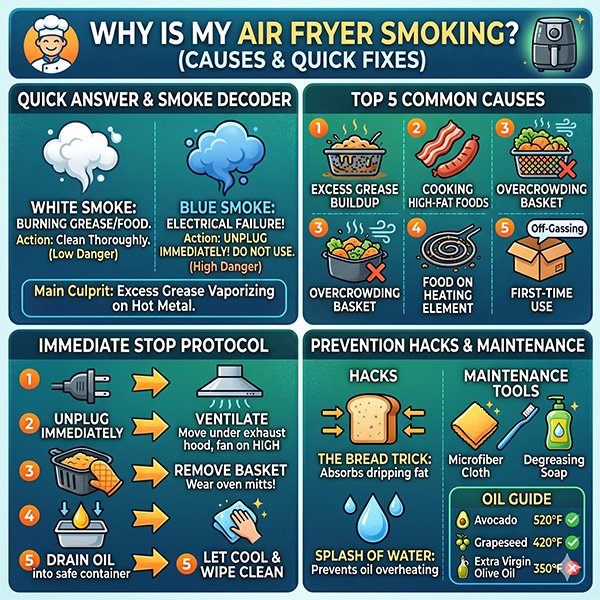
If you are looking for an immediate solution, the answer is usually excess grease. When fat drips from your food, it hits the hot metal tray below. This high heat instantly vaporizes the oil into thick, white smoke.
The top three culprits for this sudden smoke are:
- Excessive grease buildup from previous unwashed meals.
- Cooking high-fat meats like bacon, sausages, or beef burgers.
- Lightweight food particles flying up into the exposed heating element.
White Smoke vs. Blue Smoke: What Does It Mean?
Not all smoke is created equal in the culinary world. The color of the cloud billowing from your vents tells a distinct story. Knowing the exact difference can prevent a major kitchen fire and keep your family safe.
White Smoke (Grease & Steam)
An air fryer blowing white smoke is the most common scenario you will face. This usually looks like thick steam and smells heavily of cooking fat. It is annoying but generally harmless to the internal mechanics of your machine.
White smoke simply means organic matter is burning. It is the direct result of animal fats, cooking oils, or leftover food crumbs reaching their combustion point. You can usually fix this issue entirely with a quick, thorough cleaning session.
Blue Smoke (Electrical Failure)
If you ever see blue smoke from air fryer vents, you must act immediately. Blue smoke is a dangerous warning sign. It is directly associated with electrical fires, melting wire insulation, or failing internal motors.
Black or blue smoke indicates a severe hardware malfunction. Unplug the machine from the wall right away and step back to safety. Never attempt to use the appliance again until it has been inspected by a professional or replaced under warranty.
Smoke Color | Primary Cause | Immediate Action Required | Level of Danger |
White / Gray | Burning grease, high-fat foods, or heavy steam. | Clean the basket, drain excess oil, or use a grease trap. | Low |
Black | Severe food burning, melted plastic left inside. | Unplug instantly, inspect for foreign objects once cooled. | Medium |
Blue / Dark | Electrical motor failure, wiring short circuit. | Unplug, do not use again, contact customer support. | High |
The 5 Most Common Reasons Your Appliance Smokes
Understanding the root causes will help you prevent future kitchen disasters entirely. Let us explore the top five reasons your appliance might be struggling to cook cleanly.
1. Excess Grease Buildup
Your air fryer works by circulating intense, hot air around a small chamber. When grease collects at the bottom of the drawer, this air heats it rapidly. The pool of oil quickly reaches its maximum temperature tolerance and begins to burn.
Once the oil surpasses its smoke point, it instantly vaporizes into a dense cloud. This is the primary reason for air fryer grease smoke. Regular, thorough cleaning is the absolute best way to prevent this specific, highly annoying issue.
2. Cooking High-Fat Foods
Air fryers are fundamentally designed for low-fat, highly efficient cooking. When you add extremely high-fat foods, the drip system gets completely overwhelmed. Bacon, sausages, and certain beef cuts release massive amounts of rendered fat during the cooking process.
As this hot fat splatters around the cooking chamber, it hits the intensely hot metal walls. This rapid splattering creates immediate, thick clouds of white smoke. You must adjust your cooking strategy when dealing with these specific, heavy meats.
3. Overcrowding the Basket
Air circulation is the undisputed secret to a perfect, crispy crunch. When you pack the basket completely full of food, the hot air cannot flow properly. The machine struggles to maintain an even, consistent temperature throughout the chamber.
Because the airflow is blocked, the food on the outer edges can overheat and burn. Burning food leads directly to acrid smoke filling your kitchen environment. Always cook in small, manageable batches for the best culinary and mechanical results.
4. Food Particles on the Heating Element
Many home cooks completely forget to check the top of the cooking chamber. The powerful internal fan can lift lightweight foods right out of the basket. Loose breading, spinach leaves, or thin cheese slices easily fly upward into the machinery.
Once these stray particles hit the exposed heating coils, they instantly char into carbon. To fix this, you must clean air fryer heating element coils carefully. Always check this upper area if you smell a distinct, lingering burning odor.
5. First-Time Use (Off-Gassing)
If your appliance is brand new out of the box, a little smoke is normal. Manufacturers coat the internal heating elements with protective industrial oils. These oils are strictly designed to prevent rust and corrosion during overseas shipping.
When you turn the machine on for the very first time, these factory oils burn off. This safe, expected process is professionally known as off-gassing. It should stop completely after the first or second use in a well-ventilated room.
Deep Dive: High-Fat Foods That Cause Trouble
To truly master your appliance, you must know which foods are highly prone to smoking. Being proactive with your daily menu choices saves a tremendous amount of hassle. It allows you to anticipate the smoke before it ever begins.
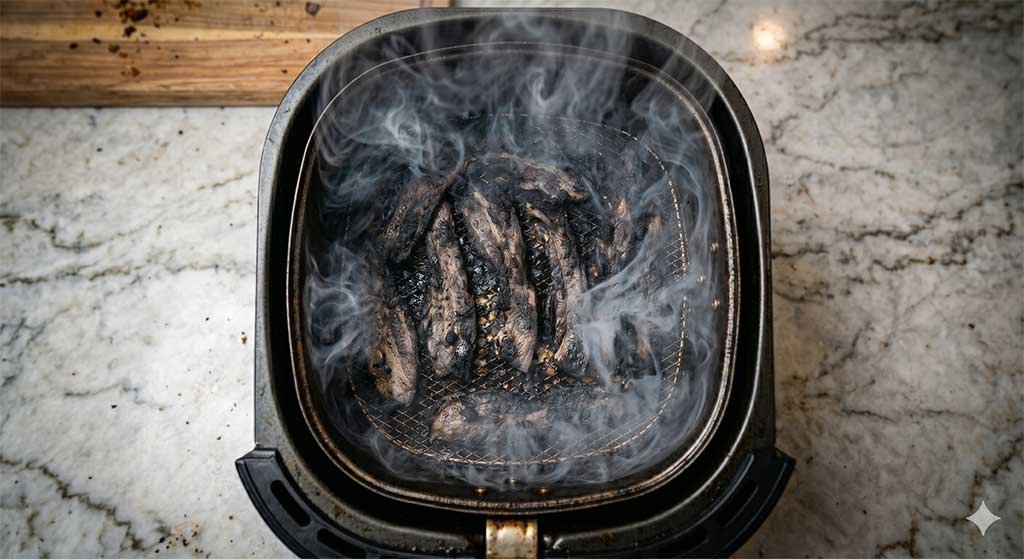
Bacon is notoriously difficult to air fry cleanly without strategic adjustments. The incredibly high fat content renders out quickly, rapidly flooding the small drip tray. This inevitably leads to a kitchen full of greasy haze and a blaring smoke detector.
Sausages and high-fat ground beef patties cause very similar, highly frustrating issues. When cooking these heavy items, you need to lower the machine’s temperature slightly. Cooking them slower allows the fat to render without instantly vaporizing into the air.
Even heavily marinated chicken thighs can be highly problematic for your machine. Sweet, sticky marinades contain complex sugars that burn very quickly at high temperatures. Always pat your marinated meats slightly dry with a paper towel before cooking.
How to Stop Air Fryer From Smoking Immediately
When the smoke alarm starts blaring, you need to act fast and safely. Panic will only lead to accidental burns or spilled hot oil. Here is a chronological, step-by-step emergency protocol to shut down the smoke immediately.
- Step 1: Unplug the machine immediately from the wall outlet. Do not just turn it off via the digital control panel. Completely severing the power stops the internal heating element from getting any hotter and creating more smoke.
- Step 2: Carefully move the unplugged appliance under your stove’s exhaust hood. Turn the exhaust fan on the absolute highest ventilation setting possible. This will quickly pull the noxious fumes out of your kitchen environment.
- Step 3: Wear thick, heat-resistant oven mitts and slowly remove the basket from the unit. Place it gently on a heat-safe surface like a silicone mat or wooden block. Be incredibly careful, as the trapped oil inside will be dangerously hot.
- Step 4: Use a paper towel or metal tongs to carefully remove the food. Drain the excess smoking oil from the bottom of the drawer into a safe, heat-proof container. Never pour boiling oil directly down your kitchen sink drain.
- Step 5: Let all the metal components cool down completely before touching them. Once the metal is safely cool, wipe the interior clean with a damp cloth. You can then resume cooking at a slightly lower, much safer temperature.
Brilliant Hacks to Prevent Grease Smoke
You do not have to permanently stop cooking your favorite fatty foods. You just need to employ a few clever, tested kitchen hacks to outsmart the appliance. These tricks safely trap the grease before it can ever vaporize.
The “Bread Trick” is a beloved secret among experienced home chefs and bloggers. Simply place a single slice of stale bread in the bottom drawer, under the crisper plate. The dry bread acts like a massive sponge, rapidly soaking up the dripping fat.
Because the bread actively absorbs the oil, the fat never touches the hot metal base. This clever barrier almost entirely eliminates the smoke output from fatty meats. Just remember to throw the greasy, soaked bread away immediately afterward.
Another highly effective hack is adding a tiny splash of water to the bottom drawer. About two tablespoons of tap water is usually more than enough. The water prevents the dripping grease from getting too hot and reaching its smoke point.
You must be incredibly careful not to add too much water, though. Too much liquid will turn the dry cooking environment into a wet steam room. Your expensive food will come out soggy and steamed instead of perfectly crispy and fried.
The Importance of Routine Maintenance
A clean kitchen appliance is a safe, efficient kitchen appliance. Establishing a strict, regular maintenance routine is the ultimate defense against unwanted smoke. You simply cannot afford to skip this crucial cleaning step if you want longevity.
After every single use, you must wash the main basket and the drip pan. Use warm, soapy water and a gentle, non-abrasive dish sponge to protect the coating. Never let sitting oil remain in the machine overnight to harden.
If you let the grease fully solidify, it becomes significantly harder to remove later. It bakes aggressively onto the non-stick coating during the very next cooking cycle. This creates a permanent, sticky residue that will always generate thick smoke.
For incredibly tough, baked-on grease stains, create a natural, safe cleaning paste. Mix standard baking soda and water, then apply it directly to the stubborn spots. Let it sit for twenty minutes to gently lift the carbonized grease without scratching.
Essential Tools for Deep Cleaning Your Appliance
Having the right tools on hand makes the maintenance process much faster and less tedious. You do not need expensive commercial cleaners to get the job done. Standard household items are incredibly effective at breaking down stubborn polymers and fats.
First, always keep a supply of high-quality microfiber cloths in your kitchen. These cloths are gentle enough to protect the delicate non-stick Teflon coating. They also naturally grip and lift away microscopic layers of grease without smearing it.
Second, a soft-bristled toothbrush is an absolute necessity for tight crevices. The edges of the crisper plate and the internal screws often trap hidden grease. A dedicated toothbrush easily dislodges these particles without damaging the surrounding metal.
Finally, standard dish soap with heavy degreasing properties is your best friend. Look for brands that specifically advertise grease-cutting power on the label. This will save you a tremendous amount of elbow grease when soaking the basket.
How to Properly Clean Air Fryer Heating Element
Cleaning the removable basket is obvious, but cleaning the upper heating coil is often ignored. This vital coil is located at the absolute top of the internal cooking chamber. It is the hottest part of the entire machine and a magnet for splatter.
When hot splatters hit this exposed coil, they bake on instantly due to the intense heat. Over time, this accumulated debris turns to pure, hardened carbon. Every time you turn the machine on, this carbon burns and creates foul-smelling smoke.
To clean it safely, always ensure the appliance is completely unplugged and stone cold. Turn the entire machine upside down to get a clear, illuminated view of the coil. This inversion makes the delicate cleaning job much easier and saves your neck.
Use a soft-bristled cleaning brush or a damp, premium microfiber cloth. Gently scrub the metal coils to remove any stuck-on, burnt food particles. Be very careful not to bend, warp, or damage the delicate metal components or the fan blades.
If there is stubborn grease stuck on the coil, use a tiny bit of concentrated dish soap. Wipe it away thoroughly with a clean, damp rag immediately afterward. You absolutely do not want soapy chemical residue burning onto your next meal.
Choosing the Right Cooking Oil
Did you know that your daily choice of cooking oil might be causing the problem? Different culinary oils have vastly different thermal smoke points. The smoke point is the exact temperature where the oil chemically breaks down and burns.
Extra virgin olive oil and unrefined coconut oil have notably low smoke points. If you use these specific oils in a machine set to 400°F, they will instantly smoke. They are simply the wrong culinary tools for high-heat air frying applications.
Instead, always choose premium oils with exceptionally high smoke points for air frying. Avocado oil, grapeseed oil, and highly refined peanut oil are excellent, highly stable choices. They can withstand intense, circulating heat without breaking down and smoking.
- Avocado Oil: Smoke point of 520°F (Excellent for all air frying).
- Grapeseed Oil: Smoke point of 420°F (Great for general cooking).
- Canola Oil: Smoke point of 400°F (Good for mid-temperature baking).
- Extra Virgin Olive Oil: Smoke point of 350°F (Avoid for high-heat air frying).
Always apply your chosen oil very sparingly to your food before cooking. You only need a light, microscopic spritz to achieve a beautifully crispy exterior texture. Drenching your food in heavy oil completely defeats the health purpose of using an air fryer.
FAQ
Yes, you can use aluminum foil, but you must be incredibly careful. Never cover the entire bottom of the basket, as this completely blocks crucial airflow. Blocking the air can cause the internal mechanics to dangerously overheat and fail.
If you use foil, only place it exactly where the food sits.
Make absolutely sure the heavy food weighs the loose foil down completely against the grate. If it is loose, the powerful fan will blow it directly into the heating element. Similarly, if you plan to use other household dishes to catch drippings or bake items, you should always verify the thermal limits of your everyday cookware before exposing it to rapid heat circulation.
A burning plastic smell is very common during the first few uses due to factory coatings. However, if the issue persists and you need a dedicated air fryer smells like plastic, you may have left hidden packaging materials inside. Always check for cardboard inserts or plastic tabs before cooking your first meal.
The thick white smoke caused by burning food grease is generally not highly toxic. However, it is a massive irritant to your sensitive eyes and respiratory system. It can also trigger sensitive smoke alarms and leave bad odors in nearby upholstery.
You should always try to ventilate your kitchen immediately if this happens. Turn on your stove’s exhaust fan and open a nearby door or kitchen window. Breathing in any kind of thick, concentrated smoke for prolonged periods is unhealthy.
You should wash the main basket and crisper plate after every single use with soap. However, a full deep clean should be performed at least once a month. This includes checking the heating coil and wiping down the entire exterior housing.
If you cook highly greasy foods like burgers or wings multiple times a week, increase this frequency. A bi-weekly deep clean will prevent the heavy oils from polymerizing onto the coil. Staying proactive is the key to a smoke-free kitchen.
Conclusion
At the end of the day, solving the mystery of why is my air fryer smoking comes down to consistent maintenance and smart cooking habits. Whether you are battling excess grease buildup or using an oil with a low smoke point, the solutions are entirely within your control.
By utilizing clever hacks like the bread trick and understanding the vital difference between white and blue smoke, you can protect your kitchen. Always remember to clean your heating elements regularly and avoid overcrowding the cooking basket. Apply these expert strategies today, fix those frustrating glitches, and restore perfectly crispy, smoke-free function yourself!




Leave a Reply