
Have you ever stared at your bathroom mirror, razor in hand, and wondered, Is Epilator Better Than Waxing? I know I have. Choosing the right hair removal method feels like an endless battle between pain, cost, and convenience. Let’s settle this debate today with a completely honest comparison.
If you are looking for a quick answer, here it is: an epilator is generally better for long-term cost savings, convenience, and catching shorter hairs (as short as 0.5mm). Waxing is better for fast, precise hair removal on sensitive areas and provides immediate skin exfoliation.
Let’s break down the details so you can make the smartest choice for your skin and budget. We’ll look at the mechanics, the costs, and how to minimize the discomfort.
Table of Contents
How Do Epilator or Waxing Actually Work?
Before we declare a winner, you need to understand the mechanics behind both methods. While both pull hair from the root, the way they approach the follicle is completely different.

The Mechanics of Epilation
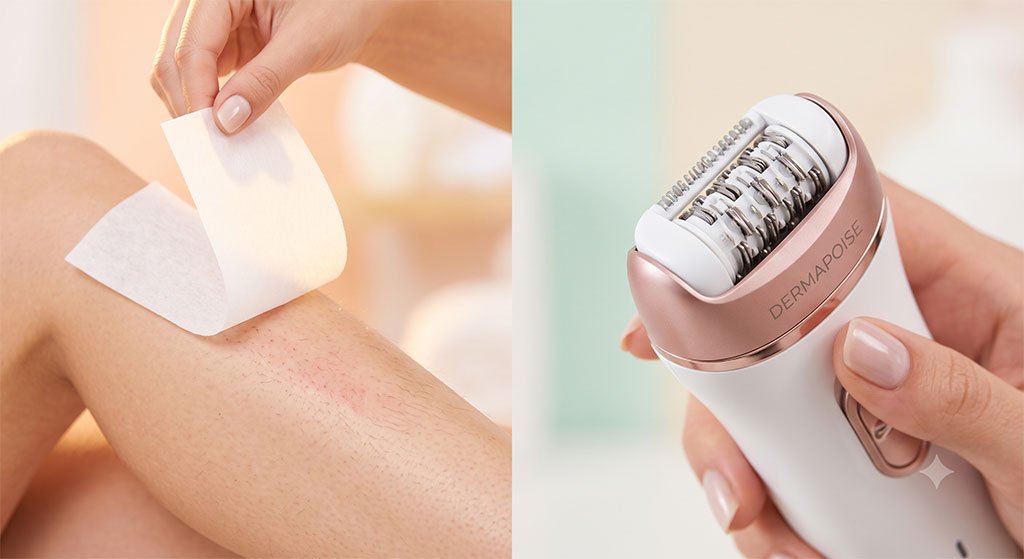
An epilator is a handheld electronic device covered in tiny, rotating mechanical tweezers. As you glide it over your skin, these tweezers rapidly grasp multiple hairs simultaneously and pull them out directly from the hair follicle.
Because the tweezers are mechanical and precise, they don’t rely on sticking to the skin. They only grab the hair. Modern devices, like the Braun Silk-épil, can catch hairs as small as a grain of sand.
The Science of Waxing
Waxing relies on adhesion. You apply a sticky substance—either hard wax, soft wax with cloth strips, or sugar wax—over the hair. The wax adheres to both the hair shaft and the top layer of dead skin cells.
When you rip the wax off, it pulls the hair from the root while simultaneously providing deep physical exfoliation. This dual action is why your skin feels incredibly soft immediately after a waxing session.
Is Epilator Better Than Waxing? Head-to-Head Comparison
Now that we know how they work, let’s pit them against each other in the categories that matter most to your daily routine.
Pain Tolerance and Discomfort
Let’s address the elephant in the room: both of these methods hurt. You are ripping hair out of your body. However, the type of pain is very different, which brings us to the epilator vs waxing pain debate.
Waxing delivers a sharp, localized shock. It’s like ripping off a giant bandage. The pain is intense but over in a split second. Your skin might throb slightly, but the worst is behind you instantly.
Epilating, on the other hand, is a sustained, continuous pinching sensation. Because the device rolls over your skin slowly, you feel a series of small plucks. For beginners, this prolonged sensation can be tough to sit through.
Hair Length Requirements (The Stubble Phase)
This is where epilators take a massive lead. To wax successfully, your hair needs to be about 1/4 inch long (the length of a grain of rice). This means you have to endure an uncomfortable “hairy phase” for several days before your salon appointment.
Epilators don’t require this waiting period. High-quality tweezers can grasp hairs as short as 0.5mm. You can maintain smooth skin continuously without ever having to wait for visible stubble to grow out.
Speed and Convenience
Waxing is significantly faster when covering large surface areas. A professional can wax both of your legs in under 30 minutes. However, it requires booking an appointment, traveling to a salon, or dealing with messy at-home kits.
Epilating takes longer per session because you must move the device slowly to ensure it catches every hair. But the convenience is unbeatable. You can do it dry, in your living room while watching TV, with zero setup or sticky cleanup.
If you are wondering how long does epilating last compared to waxing, the results are nearly identical. Both methods pull hair from the root, meaning you will enjoy smooth skin for roughly 3 to 4 weeks, depending on your natural hair growth cycle.
The 5-Year Cost Breakdown: Which Wins?
When you look at the long-term math, the financial difference between these two methods is staggering. Competitors often say epilating is cheaper, but they rarely show you the actual numbers. Let’s break it down over a 5-year timeline.
Hair Removal Method | Upfront Cost | Monthly Cost | 5-Year Total Cost |
High-End Epilator | $120 | $0 | $120 |
DIY At-Home Wax Kits | $20 | $15 | $920 |
Professional Salon Wax | $0 | $60 | $3,600 |
To see exactly how much you could save based on your own routine, use this interactive calculator to map out the financial and pain trends over time:
Investing in a device pays for itself in less than three months compared to salon visits. Additionally, you avoid the environmental e-waste of throwing away disposable wax strips and spatulas every few weeks.
Side Effects and Skin Health
Pulling hair from the root disrupts the follicle, which means you need to be proactive about your skin health to avoid irritation.
The Battle of Ingrown Hairs
Both methods can cause ingrown hairs and folliculitis (inflamed hair follicles) if the hair breaks below the skin line instead of pulling out cleanly. This happens frequently if you epilate too fast or wax at the wrong angle.
To prevent this, physical and chemical exfoliation is mandatory. Using a salicylic acid body wash or a dry brush two days after hair removal keeps dead skin from trapping the new, softer hairs as they grow back.
Sensitive Skin and Red Bumps
When comparing waxing vs epilator for sensitive skin, waxing often causes more collateral damage. Because wax adheres to the skin, pulling it off removes the top epidermal layer.
If you use retinol, AHAs, or have highly reactive skin, waxing can cause severe redness, histamine reactions, or even skin lifting. Epilators only grab the hair, leaving the skin barrier completely intact, making them a safer mechanical choice for sensitive skin types.
Transition Hack: How to Switch Without the Agony
Here is a strategy most beauty guides completely miss. If you have been shaving for years, your hair is thick and deeply rooted. If you buy an epilator and immediately use it on shaved regrowth, the pain will be unbearable.
Instead, use the “Transition Hack”:
- Book a professional wax: Let a pro quickly and cleanly remove the thick, deep-rooted hair.
- Wait 10 to 14 days: Allow the hair to grow back just slightly.
- Epilate the regrowth: The new hair will be incredibly fine, soft, and weakly rooted.
Epilating this fine regrowth reduces the initial pain by roughly 80%. Once you get past the first three sessions, your hair follicles weaken, and the process becomes practically painless.
If you’re still on the fence, watching a visual breakdown can help. For an excellent, honest comparison of these methods, I highly recommend checking out this video from MTH Health:
Which Method is Best For Specific Body Parts?
Your body has different types of skin and hair, meaning a hybrid approach is often the best strategy.
Legs and Arms
Winner: Epilator. The skin here is relatively taut and resilient. The convenience of doing this dry while sitting on your couch makes the epilator the undisputed champion for large, accessible limbs.
Underarms and Bikini Area
Winner: Waxing. When it comes to an epilator vs waxing bikini area showdown, waxing takes the crown. The skin in these areas is loose, curvy, and highly sensitive.
Using an epilator here requires manually pulling the skin incredibly tight to prevent the tweezers from pinching the skin itself. A hard wax application is much faster and infinitely more manageable for these delicate contours. However, if pulling hair from the root in this highly sensitive zone sounds like a nightmare, your safest and most painless alternative is to use the best bikini trimmer for women to keep things flawlessly tidy without the tears.
Facial Hair
Winner: Hard Wax or Specialized Epilators. Standard body epilators are too aggressive for the upper lip or chin. You must use a slim, face-specific epilator, or opt for a gentle hard wax that won’t tug at delicate facial tissue. In fact, if you’re currently relying on a razor and are tired of the daily upkeep, discovering whether an epilator beats shaving your facial hair can help you decide if upgrading your tool is worth it for that delicate skin.
Final Verdict: Should You Pluck or Pull?
If you’re tired of booking salon appointments and want absolute control over your grooming routine, investing in a high-quality device is the smarter long-term move. Is Epilator Better Than Waxing? Yes, when you factor in the massive financial savings, the lack of a stubble phase, and the sheer at-home convenience.
Yes, the first few sessions will test your patience, but the zero-stubble freedom is absolutely worth it. On the flip side, if you have incredibly sensitive, curvy areas or just want the job done in ten flat minutes by a professional, traditional waxing remains the gold standard.
Over to you! Have you tried the “wax-first, epilate-second” trick yet? Drop a comment below and let me know which method keeps your routine running smoothly.

Leave a Reply