
If you are short on time and forgot to thaw dinner, you might be wondering about cooking frozen meat in an air fryer. It is a lifesaver for busy weeknights. You can take rock-hard proteins straight from the freezer to the plate in under thirty minutes without sacrificing flavor.
This method is completely safe and incredibly efficient if you understand the right techniques. You do not need to rely on the microwave defrost setting anymore. With the right time and temperature, you can achieve a perfectly crispy exterior and a juicy, tender interior.
Whether you are preparing a quick family dinner or meal prepping for the week, this guide covers everything. We will explore the best safety practices, exact cooking times, and pro tips. Master this technique, and you will never stress over frozen dinners again.
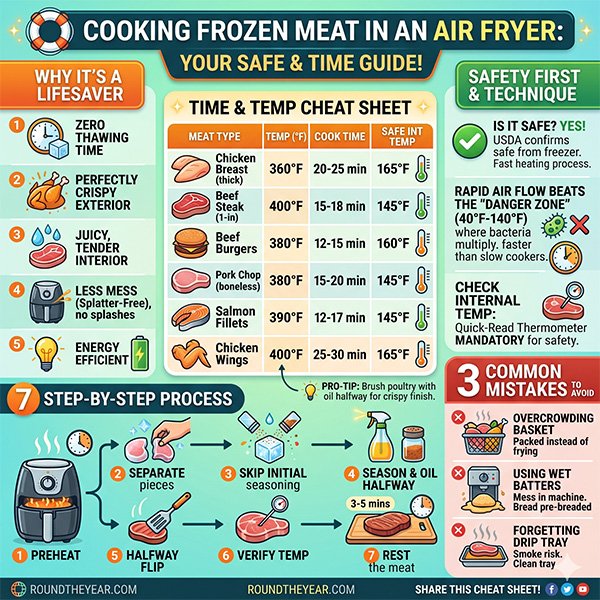
Table of Contents
Is Cooking Frozen Meat in an Air Fryer Safe?
Many home cooks worry about food safety when skipping the thawing process. The good news is that it is absolutely safe to cook meat straight from the freezer. The United States Department of Agriculture (USDA) confirms that cooking frozen meat is safe.
The primary concern with frozen meat is the “danger zone” between 40°F and 140°F. When food sits in this temperature range too long, harmful bacteria can multiply rapidly. Slow cookers struggle here because they heat up very gradually.
Air fryers, however, use rapid air circulation to heat food quickly. This fast heating process pushes the meat through the danger zone much faster than traditional methods. Because of this, air frying frozen meat is one of the safest quick-cooking options available.
To guarantee safety, you must ensure the meat reaches the proper internal temperature. A quick-read digital meat thermometer is your best friend here. Never rely on the exterior color alone, as the outside will crisp up long before the center is fully cooked.
Benefits of Air Frying Frozen Proteins
Using this method offers several distinct advantages over traditional oven baking or pan frying.
- Zero Thawing Time: You can completely eliminate the need to plan ahead. This is perfect for last-minute meal prep when you forget to pull dinner out of the freezer.
- Crispy Texture: The convection fan prevents the soggy texture often associated with microwaving frozen food. The hot air ensures a satisfying crunch on the outside.
- Juiciness Retention: The rapid exterior heat sears the outside quickly. This helps to lock in internal moisture, keeping your chicken or steak tender and juicy.
- Less Mess: The enclosed basket keeps splattering completely contained. You will not have to wipe down your stovetop after cooking a greasy burger.
- Energy Efficiency: Air fryers heat up instantly and cook faster than standard ovens. This saves both time and electricity on a daily basis.
How Long to Cook Frozen Meat in Air Fryer
If you are wondering how long to cook frozen meat in air fryer, it generally takes between 12 to 30 minutes depending on the protein and thickness. The rapid heat circulation ensures safe, even cooking. Review the exact times and temperatures for your favorite cuts in the chart below.
Meat Type (Frozen) | Temperature | Approximate Time | Safe Internal Temp |
Chicken Breasts (Thick) | 360°F | 20 – 25 mins | 165°F |
Chicken Wings | 400°F | 25 – 30 mins | 165°F |
Beef Burgers (Patties) | 380°F | 12 – 15 mins | 160°F |
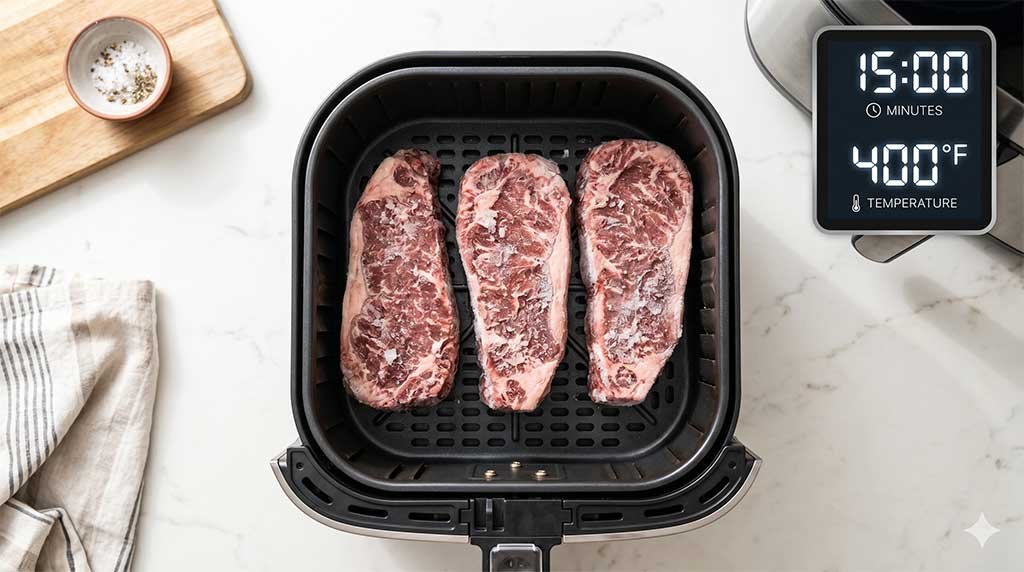
Steak (1-inch thick) | 400°F | 15 – 18 mins | 145°F |
Pork Chops (Boneless) | 380°F | 15 – 20 mins | 145°F |
Salmon Fillets | 390°F | 12 – 17 mins | 145°F |
Frozen Chicken (Breasts, Wings, and Tenders)
When cooking frozen chicken in air fryer models, lower heat is generally better for thick cuts. If you blast a thick frozen chicken breast at 400°F, the outside will burn before the inside thaws. Stick to 360°F for large breasts to ensure thorough cooking.
Because frozen poultry lacks surface fat, it can dry out quickly. A great pro-tip is to brush the chicken lightly with olive oil halfway through the cooking process. This adds moisture and helps your seasonings adhere properly for a crispy finish.
Frozen Beef (Steaks and Burgers)
For beef, thinner cuts work significantly better than thick roasts. Frozen burgers are incredibly easy and take less than 15 minutes. Steaks can be tricky, but a high temperature of 400°F will help you achieve a decent crust.
Do not expect a perfect medium-rare from a thick frozen steak. By the time the center thaws and warms up, the outer layers will be well done. Stick to thinner cuts for the best texture and flavor.
Frozen Pork (Chops and Sausages)
Pork chops are naturally lean and prone to drying out. Keep an eye on them and use a meat thermometer to ensure you pull them out exactly at 145°F. Overcooking pork by even a few minutes will result in tough, chewy meat.
Frozen sausages are incredibly forgiving in the air fryer. They contain enough fat to keep themselves moist. Just be sure to prick the casings with a fork halfway through so they do not burst under high heat.
Frozen Seafood (Salmon, White Fish, Shrimp)
Seafood is by far the fastest frozen meat to cook. Frozen shrimp can be ready in as little as 8 minutes. Salmon fillets usually take around 15 minutes, depending on their thickness.
The biggest mistake people make with seafood is overcooking it. Check your fish a few minutes before the timer goes off. It should be opaque and flake easily with a fork when it is completely done.
Step-by-Step Guide to Cooking Frozen Meat
Following a precise method ensures your food cooks evenly and tastes delicious. Here is the ultimate step-by-step process.
- Preheat the Air Fryer: Always preheat your appliance for at least 3 to 5 minutes. A hot basket is critical for jumpstarting the thawing process and ensuring a crispy exterior.
- Separate the Pieces: If your meat is frozen together in a solid block, do not force them into the basket. Run the block under cold water briefly just to separate the pieces for even airflow.
- Skip the Initial Seasoning: Spices will not stick to a block of ice; they will just blow around the basket. Wait until the surface has thawed slightly.
- Season and Oil: About 5 to 8 minutes into the cook time, pause the machine. The meat will now be wet. Spray lightly with cooking oil and apply your dry rubs or seasonings.
- The Halfway Flip: Flipping is absolutely crucial for even air circulation. Turn your meat over halfway through the total cooking time so both sides crisp up evenly.
- Verify Internal Temperature: Never guess when the food is done. Use a digital thermometer inserted into the thickest part of the meat to confirm it has reached USDA safe temperatures.
- Rest the Meat: Resting is still mandatory, even for air-fried food. Let the meat sit on a cutting board for 3 to 5 minutes so the juices can redistribute throughout the cut.
3 Common Mistakes to Avoid
Even seasoned home cooks make errors when dealing with frozen proteins. Avoid these pitfalls to get the best results every time.
Overcrowding the Basket
The convection fan needs empty space to circulate hot air. If you pack the basket full of frozen chicken, the pieces will steam instead of frying. Leave space between each piece of meat.
If you need to cook a large batch for a family dinner, do it in multiple rounds. It is better to have perfectly cooked batches than a single basket of soggy, unevenly cooked food.
Using Wet Batters
Never try to air fry frozen meat that is coated in a wet, drippy batter. The powerful convection currents will simply blow the wet batter off the meat, creating a massive mess inside the machine.
If you want a breaded texture, you must use dry breadcrumbs pressed firmly onto the meat after it has partially thawed. Alternatively, buy pre-breaded frozen items which are designed specifically for this cooking method.
Forgetting to Empty the Drip Tray
Frozen meat releases significantly more water as it thaws compared to fresh meat. This water mixes with rendered fat and drips into the bottom tray of the appliance.
If this liquid level gets too high, it will hit the heating element and cause heavy smoke. If you are cooking fatty meats like burgers or sausages, pause halfway and carefully drain the excess liquid.
FAQ
You do not need oil for the meat to cook safely. However, adding a light spray of cooking oil halfway through helps spices adhere and significantly improves the final crispy texture.
Yes, but it requires babysitting. You must cook it for 5 minutes, scrape off the browned outer layer, and repeat. It is messy and time-consuming, so defrosting in the microwave is better for solid blocks.
Rubbery chicken is usually the result of overcooking or cooking at too high of a temperature. If the heat is too high, the outside tightens up and turns rubbery before the frozen core can fully cook.
Conclusion
Mastering the art of cooking frozen meat in an air fryer will completely change how you approach weeknight dinners. It offers incredible convenience without forcing you to sacrifice food quality, texture, or flavor.
By keeping the temperature steady, seasoning halfway through, and strictly monitoring the internal temperature, you can create delicious meals on the fly. Say goodbye to the panic of forgetting to defrost dinner.
If you found this guide helpful, be sure to check out our other appliance guides. Keeping your machine in top shape is crucial, so read our step-by-step tutorial on how to deep clean your air fryer after cooking greasy meats!




Leave a Reply