
Are you tired of the endless cycle of daily stubble or the fear of painful ingrowns? If you are wondering, is it better to epilate or shave legs, you have landed in the right place. We are going to dive deep into the pros, cons, and actual science of both methods.
Finding the perfect hair removal routine can feel like an endless battle. You might love the instant gratification of a razor, but hate the prickly regrowth that appears by dinner time. Or, you might be intrigued by the long-lasting smoothness of an epilator, but terrified of the upfront pain.
As a senior grooming editor, I have tested countless devices, blades, and serums. I know that the right choice depends heavily on your unique skin texture, pain tolerance, and schedule. There is no one-size-fits-all answer, but there is a definitive right answer for you.
In this comprehensive guide, we will break down everything you need to know. We will explore the impact on your hair follicle, perform a detailed financial audit, and discuss which method cures common issues like strawberry legs. Let’s finally solve your hair removal dilemma.
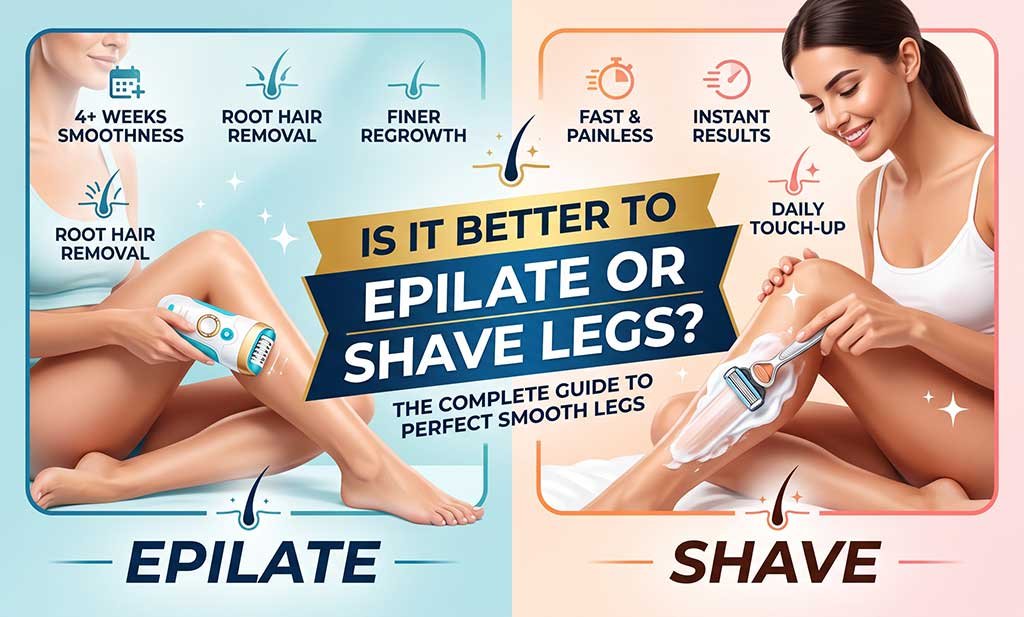
Table of Contents
Core Differences: Epilating vs. Shaving Explained
To understand which method reigns supreme, we first need to look under the microscope. The fundamental difference lies in how each tool interacts with your hair follicle and the epidermis. Both methods remove hair, but they do so at entirely different levels of the skin.
Science of Shaving: The Surface Cut
When you use a razor, you are performing a surface-level action. The sharp blades glide across your epidermis, slicing the hair shaft exactly where it exits the skin. This provides a completely painless, instant result. Your legs will feel incredibly smooth to the touch immediately after stepping out of the shower.
However, because the hair is sliced bluntly, the tip of the remaining hair is flat and sharp. When this blunt tip breaches the skin’s surface a day or two later, it feels coarse and prickly. This is why people mistakenly believe shaving makes hair grow back thicker; it doesn’t, it just changes the shape of the tip.
Because the hair root remains intact beneath the skin, the growth cycle is uninterrupted. You are essentially just mowing the lawn. To maintain that silky feeling, you must commit to wet shaving every one to three days, which can lead to friction and irritation.
Science of Epilating: The Root Extraction
An epilator works on a completely different mechanical principle. It features a rotating head equipped with dozens of tiny, motorized tweezers. As you glide the device over your skin, these tweezers rapidly grasp multiple hairs at once and pluck them entirely out of the follicle.
By removing the hair from the root, you force the body to regenerate a brand-new hair tip. When this new hair eventually grows back, it features a naturally tapered, soft point. As a result, the regrowth feels significantly finer and less abrasive than shaved stubble.
Furthermore, extracting the hair disrupts the natural hair growth cycle. Your body needs time to rebuild the hair structure from scratch. This translates to long-lasting smoothness, often keeping your legs bare for up to four weeks. Over time, repeated root extraction can even weaken the follicle, leading to sparser growth.
Head-to-Head Comparison (The Ultimate Breakdown)
If you are a visual learner, weighing the pros and cons side-by-side makes the decision much easier. Each method demands different sacrifices. Let’s look at the ultimate showdown between the classic multi-blade razor and the modern electric epilator.
Here is a detailed comparison to help you understand what you are signing up for:
Feature | Wet Shaving | Epilating |
Pain Level | Completely painless (unless you nick yourself). | High initial pain. Decreases significantly with consistent use. |
Smoothness Duration | 1 to 3 days. | 2 to 4 weeks. |
Time Investment | 3 to 5 minutes per session. | 15 to 25 minutes per session. |
Hair Length Required | Can shave at any length, even daily stubble. | Requires about 0.5mm to 2mm of growth for tweezers to grip. |
Regrowth Texture | Blunt, prickly, and feels thicker. | Tapered, soft, and naturally finer. |
Skin Impact | High friction, removes top layer of dead skin. | Low friction, but can cause temporary redness/inflammation. |
Analyzing the Pain Factor
Let’s address the elephant in the room: pain. Shaving is a painless breeze. As long as you use a fresh blade and a good shaving gel, you will feel nothing but a gentle glide. It is the ultimate comfort option for those with zero pain tolerance.
Epilating, conversely, feels exactly like plucking multiple hairs at once, because that is exactly what it is doing. The first session on fully grown leg hair will sting. However, regular users confirm that the pain drops dramatically by the third or fourth session as the skin adapts and hair grows back thinner.
The Convenience Trade-off
Shaving is fast. You can swipe a razor over your legs in three minutes before heading out the door. However, you have to do it constantly. If you calculate the time spent shaving over a month, those three-minute sessions quickly add up to hours of bathroom time.
Epilating requires a dedicated block of time. You need to sit down, stretch the skin taut, and move the device slowly. A thorough leg session might take twenty minutes. But once you are done, you can completely ignore your leg hair for nearly a month. It is a trade-off of frequency versus duration.
Is It Better to Epilate or Shave Legs for Your Specific Skin Type?
This is where the debate gets truly personal. We cannot definitively answer is it better to epilate or shave legs without analyzing your specific dermatological needs. What works for normal skin might trigger a massive breakout on sensitive skin. Let’s break down the best approach for common skin conditions.
Best Approach for Strawberry Legs (Keratosis Pilaris)
Strawberry legs are characterized by dark, dotted pores that resemble the seeds on a strawberry. This condition is often caused by trapped keratin, enlarged pores, or oxidized oil. If you suffer from this, shaving can actually make it look much worse, as the blunt dark hair sits right at the surface.
For those with keratosis pilaris, epilating is often the superior choice. By removing the dark hair root completely, the dark dots instantly vanish, giving the skin a much clearer appearance. Combined with a strong chemical exfoliant like salicylic acid, epilating can dramatically improve the look of strawberry legs.

Dealing with Sensitive Skin and Razor Burn
If you have highly sensitive skin, the daily friction of a multi-blade razor scraping across your epidermis is a recipe for disaster. This aggressive physical exfoliation strips the skin’s moisture barrier, leading to fiery red razor burn, micro-cuts, and severe irritation.
While epilating causes temporary redness immediately after plucking, it does not scrape the skin’s surface. Because you only epilate once or twice a month, your sensitive skin has weeks to rest and recover. For chronic razor burn sufferers, ditching the blade for an epilator is a game-changer.
Managing Coarse, Thick Hair
If you have genetically thick, dark, and coarse leg hair, shaving can be incredibly frustrating. You might shave in the morning and feel a shadow of stubble by 5:00 PM. The blunt cut makes thick hair feel like sandpaper as it pushes through the skin.
Epilating coarse hair is initially more painful because the root is deeply anchored. However, the payoff is massive. Extracting coarse hair guarantees weeks of smoothness. More importantly, when it grows back, the new tapered tip will feel incredibly soft compared to shaved coarse hair.
Which is Cheaper in the Long Run?
When deciding between an epilator vs razor, we have to look at your wallet. Many people avoid epilators because of the high price tag. A premium wet/dry model can cost anywhere from $100 to $180. A disposable razor or basic cartridge handle might cost $10 upfront.
However, let’s do the math for a full year. High-quality razor cartridges are expensive, often costing $15 to $20 for a pack of four. If you shave regularly, you will go through two cartridges a month. Add in shaving cream, and you are easily spending $100 to $150 annually on shaving supplies.
An epilator is a one-time investment. A high-end device will last you three to five years without needing replacement parts. Over a five-year period, shaving will cost you roughly $750, while epilating will cost you the initial $150. Epilating is undeniably the superior financial choice for long-term grooming.
The Battle of Ingrown Hairs: Who Wins?
Ingrown hairs are the nemesis of smooth legs. They occur when a hair curls back on itself and grows underneath the skin, causing a painful, inflamed bump. Both shaving and epilating can cause ingrown hairs, but they happen for completely different reasons.
When you shave, the sharp, angled tip of the cut hair can easily snag on the edge of the pore as it grows out, forcing it to curl downward. This is especially common if you wear tight clothing immediately after shaving, which presses the hair back into the skin.
When you epilate, ingrown hairs happen if the tweezers break the hair below the skin line instead of pulling the root. The weak, new hair struggles to push through dead skin cells. The absolute best way to prevent ingrowns, regardless of your chosen method, is aggressive and consistent physical and chemical exfoliation.
Step-by-Step Guide to Perfect Leg Hair Removal
Your results are only as good as your technique. Most complaints about pain or irritation stem from user error. Whether you choose to pluck or shave, following a strict pre-game and post-game routine is mandatory for achieving flawless, red-carpet-ready legs.
Ultimate Epilation Routine
To minimize pain and maximize results, follow these critical steps when using your device:
- Exfoliate 24 hours prior: Use a granular scrub or a dry brush. This frees any trapped hairs and removes dead skin that could block the tweezers. Never exfoliate immediately before epilating, as it makes the skin too sensitive.
- Take a warm shower: Spend five to ten minutes in warm water to relax the skin and open your pores. This makes the hair root slide out much easier, significantly reducing the pain factor.
- Hold the skin taut: This is the most crucial step. Use your free hand to stretch your leg skin tight. Glide the device slowly against the direction of hair growth at a 90-degree angle. Do not press hard.
- Apply a soothing post-care serum: Immediately after, your pores will be open and your skin will be red. Apply a cooling, alcohol-free lotion containing aloe vera, witch hazel, or tea tree oil to prevent inflammation.
Perfect Shave Routine
If you prefer the razor, elevate your routine to protect your skin barrier and achieve the closest possible shave:
- Hydrate the hair: Stand in the shower for at least three minutes before shaving. Hydrated hair swells and softens, making it much easier to cut.
- Use a thick barrier cream: Never shave with bar soap; it dries the skin. Use a rich, moisturizing shaving gel or oil to create a protective slip between the blade and your epidermis.
- Use a sharp, clean razor: A dull blade causes dragging, micro-tears, and razor burn. Replace your cartridge every five to seven uses. Rinse the blade with hot water after every single stroke.
- Moisturize immediately: The moment you step out of the shower and pat your legs dry, apply a thick ceramide-rich body butter. Shaving exfoliates the skin, so you must replace that lost moisture barrier instantly.
Top Tool Recommendations
To achieve the best results, you need the right hardware. Not all grooming tools are created equal. Investing in high-quality devices will save your skin from unnecessary trauma and yield much smoother, longer-lasting results.
If you choose the epilation route, the Braun Silk-épil 9 is the undisputed champion. It features a wide head for faster removal, micro-grip tweezers that catch hairs as short as a grain of sand, and it is fully waterproof. Being able to epilate underwater in the bathtub drastically reduces the pain sensation.
If you are a dedicated shaver, ditch the cheap single-blade disposables. Opt for a premium multi-blade system like the Gillette Venus Extra Smooth which features a ribbon of moisture for superior glide. Alternatively, consider a high-end safety razor; though there is a learning curve, a single sharp blade causes far less irritation. (And if you are also shopping for a partner with similar razor burn issues, check out our guide on the best electric shaver for sensitive skin male).
Engaging YouTube Resource
Sometimes, seeing the process in action is better than reading about it. If you want a visual breakdown of the pain levels, the technique, and the real-world results a few days later, check out this excellent video comparison.
Sarah Wisted does a fantastic job showing what an epilated leg looks like compared to a shaved leg days after the treatment, proving the points we’ve discussed about regrowth texture.
FAQ
No, it is not permanent like laser hair removal. However, repeatedly pulling the hair from the root can traumatize and exhaust the follicle over time. After years of consistent epilation, many notice their leg hair grows back much sparser, thinner, and slower.
It is a different type of pain. Waxing rips all the hair out in one sudden, massive shock. Epilating pulls the hairs out continuously over a longer period. Most users find waxing more violently painful upfront, but epilating requires more sustained mental endurance.
Yes, but proceed with extreme caution. The skin in these areas is incredibly sensitive and loose. You must hold the skin extremely tight to prevent the tweezers from pinching the skin. Beginners should master their legs before moving to more sensitive zones.
This means the epilator broke the hairs at the surface rather than pulling them from the root. This is usually caused by moving the device too fast across the skin or not holding the device at the proper 90-degree angle. Slow down your technique.
Final Verdict
So, let’s wrap this up. We have explored the anatomy of hair, the pain thresholds, and the financial impacts. But ultimately, is it better to epilate or shave legs?
The final verdict depends entirely on your lifestyle priorities. It is undeniably better to epilate if you value long-lasting smoothness, want your hair to grow back finer and softer, and are willing to push through the initial discomfort. It is the superior choice for managing strawberry legs and saving money in the long run.
Conversely, it is better to shave if you have a very low pain tolerance, need instant results for a night out, or simply enjoy the quick, daily ritual of a hot shower and a smooth blade.
There is no wrong choice, only the choice that makes you feel the most confident in your own skin. Whichever method you choose, commit to a rigorous routine of exfoliation and deep hydration, and you will achieve the flawless, glowing legs you desire.

Leave a Reply