
Are you facing an unexpected laundry disaster? Mastering maytag commercial technology washer troubleshooting is easier than you think. You do not need to call an expensive repairman right away. In this comprehensive guide, you will learn exactly how to diagnose hidden faults, clear technical glitches, and get your washing machine running perfectly again.
When your appliance stops working, panic usually sets in. However, these machines are built with highly intelligent diagnostic systems. By tapping into these built-in systems, you can quickly identify the exact part causing the malfunction. This saves you significant time, money, and frustration on unnecessary parts.
This article covers everything from decoding error codes to fixing mechanical failures. We will walk through the exact testing sequences used by professional technicians. Let’s dive deep into restoring your machine’s performance today.
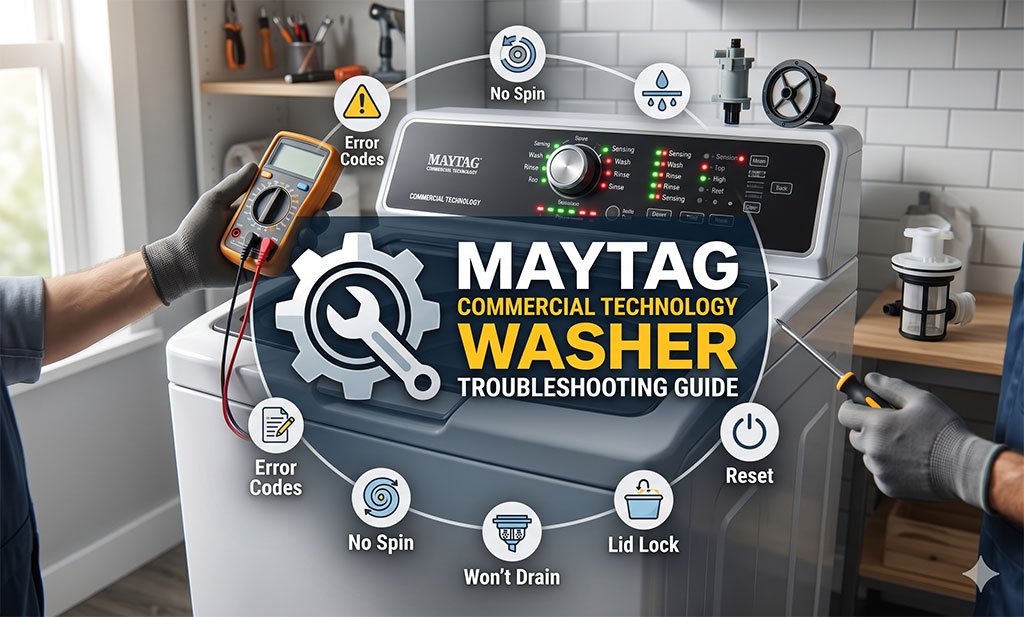
Table of Contents
How to Enter Maytag Washer Diagnostic Mode
Before grabbing a screwdriver, you must ask the machine what is wrong. The Maytag washer diagnostic mode is a hidden service menu designed for technicians. It tests every internal component independently. Accessing this mode is your very first step in any successful repair journey.
The process requires a specific sequence of dial turns. You must perform these movements quickly and accurately. If you fail on the first attempt, do not worry. Simply reset the dial and try the sequence again from the beginning.
Step-by-Step Diagnostic Sequence
Follow these exact movements to unlock the service menu. Keep your hands steady and move at a brisk pace.
- Ensure the machine is completely turned off with no illuminated lights.
- Turn the main cycle selector dial to the 12:00 (straight up) position.
- Rotate the dial one full counter-clockwise turn back to 12:00.
- Quickly rotate the dial: three clicks clockwise, one click counter-clockwise, and one click clockwise.
- Watch the control panel; if all lights begin flashing, you have successfully entered the testing mode.
Once the lights flash, rotate the dial clockwise until only the “Done” light is illuminated. Press the Start button. You are now ready to read the stored fault records.
Decoding Common Maytag Washer Error Codes
When you access the fault logs, the machine communicates through blinking lights. These lights represent specific Maytag washer error codes. You must translate these flashing sequences into actionable repair data. The sensing, wash, rinse, spin, and done lights correspond to distinct numerical values.
Understanding these codes removes the guesswork from your appliance repair project. Since they are built by the same parent company, many of these exact fault codes apply if you are ever diagnosing an Amana washing machine. Instead of replacing random parts, you target the exact sensor or motor that failed. Below is a comprehensive breakdown of the most frequent faults you will encounter during diagnostics.
Error Code |
Light Sequence Displayed |
Meaning & Root Cause |
Quick Fix Solution |
|---|---|---|---|
F20 |
Wash + Rinse + Spin |
Water supply issue / Slow fill |
Check hot/cold valves, clean inlet screens, unkink hoses. |
F21 |
Rinse + Spin + Done |
Long drain time / Clog |
Clean drain pump filter, check hose for coin blockages. |
F22 |
Sensing + Wash + Done |
Lid lock failure |
Clear debris from the latch, align the strike mechanism. |
F03 |
Sensing + Spin |
Pressure sensor fault |
Blow out the pressure hose, remove heavy soap scum. |
F5E2 |
Wash + Done |
Door lock mechanism fault |
Inspect lid switch harness, replace faulty locking assembly. |
F7E1 |
Sensing + Wash + Rinse |
Basket speed fault |
Check drive belt tension, inspect the shift actuator. |
How to Reset Maytag Washer and Clear Faults
Sometimes, your appliance experiences a temporary electronic brain freeze. Before tearing into the hardware, you should always perform a hard reset. A simple power cycle can clear ghost faults and restore normal operation instantly.
Learning how to reset Maytag washer systems is a fundamental maintenance skill. This clears the volatile memory on the main control board. It forces the computer to re-evaluate the status of all connected sensors upon startup.
The Standard Power Cycle Method
- Unplug the washing machine directly from the wall outlet.
- Wait a minimum of 60 seconds to allow capacitors to discharge.
- Plug the machine back into the wall outlet securely.
- Open and close the lid six times within a 12-second window.
This specific sequence forces a factory reset on most commercial technology models. If the machine resumes normal function, you experienced a simple software glitch. If the problem returns immediately, you have a physical hardware failure.
Maytag Commercial Technology Washer Troubleshooting: Core Issues
When resetting the electronics fails, you must inspect the hardware. This section covers the ten most common mechanical and electrical failures. We will explore the symptoms, the root causes, and the exact steps needed to perform a permanent repair.
1. The Maytag Washer Not Spinning or Agitating
- The Symptom: The cycle finishes, but your clothes are left soaking wet.
- The Root Cause: A faulty shift actuator (the optical sensor that transitions the machine) or a worn drive belt and splutch cam assembly.
- The Quick Fix: Lay the machine back and remove the protective shield. Inspect the rubber drive belt for looseness or snapping. If the belt is tight, you will likely need to test and replace the shift actuator.
2. The Machine Refuses to Drain Water
- The Symptom: Standing water remains trapped inside the tub after the cycle ends.
- The Root Cause: A physical blockage inside the drain pump housing or an improperly configured household drainpipe.
- The Quick Fix: Inspect the plastic impeller blades inside the pump and remove any trapped coins, lint, or baby socks. Verify your home’s standpipe is between 39 and 96 inches high to prevent siphoning.
3. The Washer Will Not Fill With Water
- The Symptom: The cycle starts, but the tub remains completely bone dry.
- The Root Cause: Clogged inlet valve screens or closed water supply valves.
- The Quick Fix: Ensure both hot and cold wall valves are fully open. Disconnect the hoses from the back of the appliance and scrub the small mesh screens with a toothbrush and white vinegar to remove hard water scale.
4. The Washer Lid Will Not Lock
- The Symptom: The machine halts all motor functions and refuses to start.
- The Root Cause: A bent/snapped plastic lid strike or sticky detergent residue jamming the internal locking sensor.
- The Quick Fix: Inspect the physical plastic strike protruding from the lid. Wipe away any built-up detergent residue from the locking mechanism cavity using a damp microfiber cloth to ensure a secure connection.
5. Violent Shaking and Unbalanced Loads
- The Symptom: The machine violently bangs against the wall during the high-speed spin cycle.
- The Root Cause: Failed spring-loaded suspension rods that have lost their tensile strength and dampening grease.
- The Quick Fix: Press down firmly on the empty basket. If the tub bounces up and down rapidly like a pogo stick, all four suspension rods require immediate replacement to prevent dangerous operation.
6. Water Leaking From the Bottom
- The Symptom: Puddles form beneath your laundry equipment, threatening severe floor damage.
- The Root Cause: A ruptured internal tub seal, a cracked outer plastic tub, or compromised exterior connections.
- The Quick Fix: Inspect the drain pump housing for hairline cracks and verify the rubber drain hose is securely clamped. If external connections are completely dry, you may need a massive teardown to fix a cracked tub.
7. The Cycle Stops Randomly Mid-Wash
- The Symptom: The machine abruptly dies or pauses halfway through a selected cycle.
- The Root Cause: A failing main control board (expanding solder joints due to heat) or a faulty thermal fuse/motor capacitor.
- The Quick Fix: Use a digital multimeter to check for continuous electrical flow on the thermal safety switch and capacitor. If they pass the continuity test, the main electronic board is likely failing.
8. Clothes Come Out Covered in Soap Scum
- The Symptom: Garments emerge stiff and covered in a chalky, white residue.
- The Root Cause: Overdosing high-efficiency (HE) detergent, which creates excessive suds that confuse the internal pressure switch.
- The Quick Fix: Reduce soap to just two tablespoons per heavy load. Run an empty hot water cycle with heavily concentrated white vinegar to break down existing soap scale and clear the pressure sensor tube.
9. Loud Grinding or Roaring Noises
- The Symptom: The machine sounds like an airplane taking off during the spin cycle.
- The Root Cause: Severe main tub bearing failure caused by water bypassing a degraded waterproof seal.
- The Quick Fix: Check the splutch cam teeth to see if they are severely stripped. If not, replacing bearings on these specific models usually requires the advanced, expensive repair of installing a completely new gearcase transmission.
10. The Machine is Completely Dead
- The Quick Fix: Plug a lamp into the wall outlet to verify 120 volts of power. Check your home’s electrical breaker box. Finally, follow the internal wiring harness to inspect the main control board for blown components.
- The Symptom: The control panel remains entirely dark and completely unresponsive to button presses.
- The Root Cause: No power from the wall outlet, a tripped breaker, a blown internal surge suppressor, or catastrophic circuit board failure.
The Critical Final Step: Washer Recalibration
After performing any parts replacement, you must recalibrate the internal computer. Failing to recalibrate will cause the machine to operate erratically. The computer must learn the new weight and friction values of the freshly installed components.
How to Run Recalibration Mode
- Ensure the tub is completely empty and the lid is securely closed.
- Enter the diagnostic mode using the sequence detailed in section one.
- Once all lights are flashing, turn the dial exactly four clicks clockwise.
- Only the “Rinse” light should be illuminated.
- Press the Start button and step away.
The machine will take approximately three minutes to run through various speeds and lock states. Do not interrupt this process. Once the lid unlocks and the lights turn off, your machine is perfectly calibrated and ready for daily laundry duty.
Pro-Tips for Extending Maytag Washer’s Lifespan
Preventative maintenance is significantly cheaper than reactive troubleshooting. By adopting a few simple habits, you can extend the operational life of your appliance by several decades.
- Leave the Lid Open: Always leave the lid raised after finishing a wash day. This allows internal moisture to evaporate, preventing toxic black mold and foul mildew odors.
- Level the Feet: Use a bubble level to ensure the machine sits perfectly flat on the floor. Uneven flooring destroys suspension rods and bearings rapidly.
- Clean the Affresh Cycle: Run a dedicated tub cleaning tablet through the hottest cycle once a month. This dissolves hard water calcium deposits that destroy internal sensors.
Conclusion
Handling appliance repairs yourself is incredibly rewarding. By utilizing this guide, mastering maytag commercial technology washer troubleshooting is entirely within your grasp. You now possess the specialized knowledge to decipher blinking error codes, reset glitching control boards, and perform advanced physical repairs like a seasoned technician.
Remember the golden rule of appliance maintenance: always run a digital diagnostic and verify component failure with a multimeter before purchasing expensive replacement parts. If you found this breakdown helpful, save this page for your future reference and share it with others facing laundry downtime.




Leave a Reply